
Spades Fever: Card Plus Royale
WildCard GamesCard
4.53.01K Reviews
- Version
- 1.31.1
- Installs
- 1.00M
- Age Rating
- Everyone
Screenshots
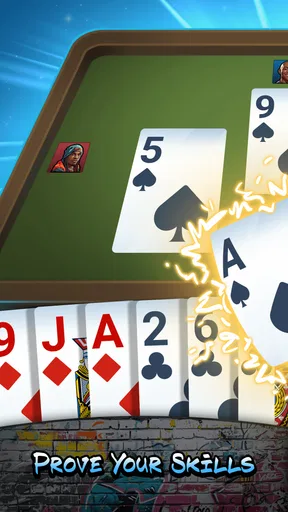
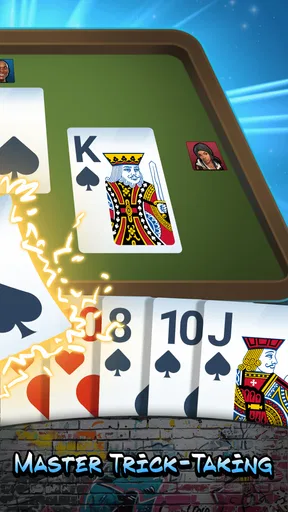



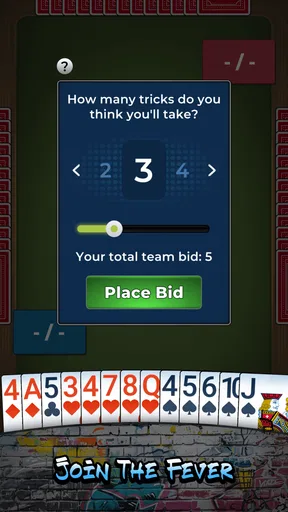

Our Review of Spades Fever: Card Plus Royale
 Analysis by Appyee
I approached Spades Fever: Card Plus Royale as the sort of game I could open for a short break, rather than something I would need to study before playing. That first impression matters with a card game: the rules should become familiar quickly, while the decisions should remain interesting after the novelty wears off. This is a free mobile card game from WildCard Games, aimed at players who enjoy Spades and want a focused way to practise bidding, trick-taking, and partner awareness.
The game is listed for Everyone, which matches its straightforward card-table presentation. It has reached over a million installs and holds a 4.5 average from around ten thousand ratings, so it is clearly not an obscure experiment. I would still judge it by a more useful question than popularity: does it make a few spare minutes feel rewarding, and does it offer enough strategic tension to bring me back?
How I would decide whether Spades Fever fits me
My first decision criterion is the kind of card experience I want. If I am looking for a traditional Spades session with familiar bidding and trick-taking, this game is immediately relevant. If I want a broad collection of unrelated card games, a large social lobby, or a story-driven adventure, I would look elsewhere. Its identity is narrower, and that focus is one of its advantages.
The second criterion is how much control I want over the pace. A mobile card game needs to work when I have only a few minutes, but it should also give me a reason to continue when I have longer. I found the appeal strongest in the middle: a quick session can feel complete, while a longer run lets me think about patterns, mistakes, and how aggressively I should bid next time.
I also consider whether a game rewards careful decisions or merely keeps dealing hands. Spades is naturally good at creating this distinction because a bid affects the whole hand. Overbidding can leave a team exposed, while bidding too cautiously may waste a strong position. That makes each round more than a sequence of taps, provided I pay attention to what has already been played.
Finally, I look at the practical commitment. The game is free to download, with optional in-app purchases listed from $5.99 to $7.99 per item. That makes it easy to try without paying first, but anyone who dislikes purchase prompts or prefers a completely fixed-price experience should keep that trade-off in mind. I would not install it expecting a premium, one-time-purchase card table.
The learning curve is friendly, but the decisions are not empty
The basic flow is approachable for someone who already knows Spades, and it is also a reasonable starting point for a newcomer who wants to learn through play. The important distinction is that simple rules do not mean automatic decisions. I still need to estimate how many tricks my hand can support, consider the strength of the spade cards, and avoid treating every attractive hand as a reason to bid high.
One useful habit is to separate reliable tricks from hopeful ones. A high card that looks powerful before the hand begins may become less dependable once another suit is led or once stronger cards have been removed. I found that thinking in those two groups helped me make more disciplined bids than simply counting the cards that looked impressive.
Another practical tip is to watch the discarded information, not just the cards I personally hold. When players fail to follow a suit, that changes what they may be able to do later. In a four-player trick-taking game, those small clues can matter more than the excitement of winning the current trick. This is where the game becomes a useful mental exercise rather than a passive time filler.
Why the focused format works well on a phone
The strongest part of this release is its clear purpose. I do not have to browse through a catalogue before reaching the type of game I wanted. For someone who already enjoys Spades, that directness is valuable. I can use it as a short daily practice session, a way to refresh the rules, or a relaxed alternative to more demanding competitive games.
It also suits the way people actually use phones. I might play while waiting for an appointment, during a quiet commute, or after finishing a task when I want something engaging but not mentally exhausting. A hand gives me a contained activity with a natural stopping point. That is more convenient than starting a long-form game when I know I may need to put the phone down quickly.
The best everyday use case is a player who has ten or fifteen spare minutes and wants a game with decisions, not just reflexes. I can begin with a cautious approach, notice where my estimates were wrong, and adjust the next hand. That small loop—bid, observe, review, improve—is what gives the experience more staying power than a random card shuffle.
Small strategic routines that improve the experience
I recommend setting a personal rule before playing: do not judge a bid only by whether the hand succeeds. A lucky result can hide a poor calculation, while a sensible bid can fail because the cards fall badly. Looking at the reasoning behind the choice keeps the game from becoming an emotional cycle of celebrating wins and blaming losses.
I also prefer to track the remaining high cards mentally instead of trying to win every trick early. A strong opening can tempt me to spend valuable cards too soon. Holding back one dependable card may be more useful later, particularly when I need to protect a contract or control the lead. This is a subtle but important shift from “Can I win this trick?” to “What will winning this trick cost me?”
For newer players, I would begin with conservative bids and use the first sessions to learn how the game handles different hand shapes. A hand with several cards in one suit may be less flexible than it looks, while a hand with useful control cards can be stronger than its raw high-card count suggests. That kind of practice is more valuable than chasing spectacular scores immediately.
Where it wins against broader card-game alternatives
Compared with a general card-game collection, this title wins through concentration. A collection may offer more variety, but it can also dilute the experience when I only want Spades. Here, the rules, decisions, and rhythm all point in the same direction. That makes it easier to settle into a strategy instead of repeatedly learning a new game.
It also has an advantage over very casual card games that depend almost entirely on luck. Spades still contains uncertainty, but bidding and card management give me meaningful influence over the outcome. I can improve by paying attention, and that sense of progress is important. The game does not need complicated mechanics to make a hand feel earned.
Against a physical deck, the phone version is more convenient. I do not need three other people available, a table, or time to explain the rules before starting. That convenience is the main reason I would choose it when I am alone. The compromise is that a digital opponent or teammate cannot reproduce every part of a face-to-face game, especially the conversation and shared atmosphere around the table.
Where another option may be a better fit
I would not recommend this as the first choice for someone whose priority is live social play. If the best part of Spades for you is reading friends, negotiating house rules, and laughing over questionable bids, an in-person game or a multiplayer-focused alternative will probably feel more satisfying. A focused mobile experience can recreate the decisions, but not the whole social setting.
It may also be a poor fit for players who want a large range of modes in one installation. The store summary presents it as a game about mastering Spades through strategic card play, and that focus should be treated honestly. Players who quickly tire of one ruleset may prefer a broader card hub, even if reaching a specific game takes more navigation.
There is another trade-off for people who dislike spending pressure in free games. The download price is zero, but optional purchases are part of the model. I would try the free experience first and decide whether it already gives me what I need. If the core sessions feel satisfying without buying anything, there is no reason to treat the optional items as necessary; if purchase prompts bother me on principle, a paid alternative may feel cleaner.
What changes when moving from a physical deck
The cost of switching from tabletop Spades is not financial alone. I give up the ability to create my own house rules, choose partners, and adjust the pace around the people at the table. In return, I gain immediate access and a consistent digital setup. That exchange makes sense when convenience matters more than social flexibility.
Players moving from another mobile Spades game may notice a different kind of switching cost: habit. Even small differences in card presentation, turn timing, or how information is displayed can interrupt an established routine. I would not move simply because this game has a familiar name. I would move if its focused design, current feel, and free entry point match the way I actually want to play.
The release is dated August 21, 2023, and the current version is 1.28.0. It requires Android 8.0 or later, so compatibility is worth checking before planning to use it on an older device. Those details are especially relevant if I am installing it on a spare phone rather than my everyday handset.
Because the game is a mobile card title rather than a demanding action game, I would expect the main question on an older supported phone to be comfort: readable cards, responsive input, and a layout that remains easy to follow. I would test a few hands before committing to long sessions. A card game can be strategically excellent and still become tiring if the interface makes every decision feel cramped.
Who will get the most from it
I think the best audience is a casual or intermediate Spades player who wants regular practice without arranging a group. It is also suitable for someone who enjoys quiet, turn-based thinking and likes improving through repeated decisions. The Everyone rating makes it approachable for a wide audience, although younger players may still benefit from learning the basic rules with someone who already understands bidding.
It is less suitable for people who need constant novelty, deep competitive matchmaking, or a strong narrative reason to continue. I would also skip it if I wanted a game that could be enjoyed without thinking at all. The fun depends on noticing patterns and accepting that some hands require restraint. That is a strength for strategic players, but a limitation for anyone seeking pure relaxation.
One of the more useful ways to play is as a short training routine. I can choose a small goal for a session, such as avoiding optimistic bids or paying attention to which suits have been exhausted. This gives each hand a purpose beyond winning. It also prevents the common problem of playing several rounds on autopilot and learning nothing from them.
My recommendation after weighing the trade-offs
Spades Fever: Card Plus Royale is an easy recommendation for players who specifically want a focused Spades experience on a phone. WildCard Games has chosen a sensible middle ground: the game is approachable enough for casual sessions, yet the underlying card decisions leave room for careful play. Its free entry makes trying it straightforward, while the optional purchase range means I would keep expectations realistic about the business model.
I would recommend installing it if you enjoy bidding, trick-taking, and the quiet satisfaction of making a better decision on the next hand. Start conservatively, treat failed bids as information, and pay attention to cards that reveal what opponents can no longer follow. Those habits make the game more rewarding than simply tapping the suggested play and waiting for the result.
I would choose a different category of alternative if my priority were a lively social table, a large collection of card games, or a fixed-price experience with no optional purchases. But for a player who wants Spades available whenever a spare moment appears, this is a practical and enjoyable choice. With its 4.5 average from around ten thousand ratings and over a million installs, it has enough audience interest to justify a try; more importantly, its focused design gives that try a clear reason to continue.
Privacy and Permissions
See what permissions an app requests and how it handles your data.
- Wi-Fi connection information
- view Wi-Fi connections
- Other
- view network connections, full network access, control vibration, prevent device from sleeping, Google Play license check
Verdict
Strengths of Spades Fever: Card Plus Royale
- Quick matches make it easy to play during short breaks.
- Simple controls are comfortable on both phones and tablets.
- Competitive scoring adds tension beyond ordinary card games.
- Bright visuals and sound effects make rounds feel lively.
- Useful for practicing bidding, timing, and strategic card play.
Limitations of Spades Fever: Card Plus Royale
- Random card deals can make some rounds feel unfair.
- Online competition may be frustrating for inexperienced players.
- Progression can feel repetitive after extended sessions.
- Ads or optional purchases may interrupt the playing experience.
- A stable internet connection may be needed for some features.
Other Releases by WildCard Games
View All


Similar Picks in This Category
View All
Solitaire - Classic Card Games
MobilityWare4.6

UNO!™
Mattel163 Limited4.3

Spider Solitaire: Card Games
MobilityWare4.6

Solitaire.com - Classic Cards
Tripledot Studios Limited4.7

Plants vs. Zombies™ Heroes
ELECTRONIC ARTS4.1

Hearthstone
Blizzard Entertainment, Inc.4.1
Frequently Asked Questions
What is Spades Fever: Card Plus Royale?
Spades Fever: Card Plus Royale is a digital version of the classic Spades card game, designed for players who enjoy trick-taking strategy on mobile devices. It typically combines traditional rules with competitive matches, progression systems, and Royale-style challenges. Before downloading, players should review the specific game modes, supported rules, and available features because the experience may differ from traditional Spades depending on the selected mode.
Can I play Spades Fever: Card Plus Royale offline?
Offline availability depends on the version and mode offered by the developer. Some card games provide solo matches against computer-controlled opponents, while multiplayer competitions, leaderboards, events, and account synchronization usually require an internet connection. If offline play is important to you, check the app-store description and permissions before installing, as connection requirements can change after updates.
Is Spades Fever: Card Plus Royale free to download and play?
The game may be free to install while including optional in-app purchases, advertising, virtual currency, or premium content. These purchases can sometimes provide cosmetic items, extra resources, faster progression, or access to special features rather than being required for every match. Parents and players should review the store listing and device purchase settings to understand possible costs before playing.
Does the game support multiplayer matches?
Spades Fever: Card Plus Royale is aimed at players who want a competitive card-game experience, so multiplayer functionality may be one of its main attractions. Depending on the current release, you may be able to compete against online opponents, friends, or players selected through matchmaking. Multiplayer features generally require a stable connection and may depend on servers, regional availability, and an active game account.
Is Spades Fever: Card Plus Royale suitable for beginners?
The game can be suitable for beginners if it includes tutorials, practice rounds, or explanations of bidding and trick-taking rules. However, new players should remember that Spades requires planning, communication with a partner, and careful scoring decisions. Experienced opponents may make early matches challenging. Starting with solo games or beginner tables is usually the best way to learn before entering more competitive modes.
Play our best games!


